
How a Quick ATM Scheme Exposed the Flaws in Criminal Planning
We analyze a case that shows how physical evidence can unravel 'anonymous' dark web transactions. This includes a close look at how law enforcement traces financial crimes back to individuals, even when using privacy-focused tools.
$ dark web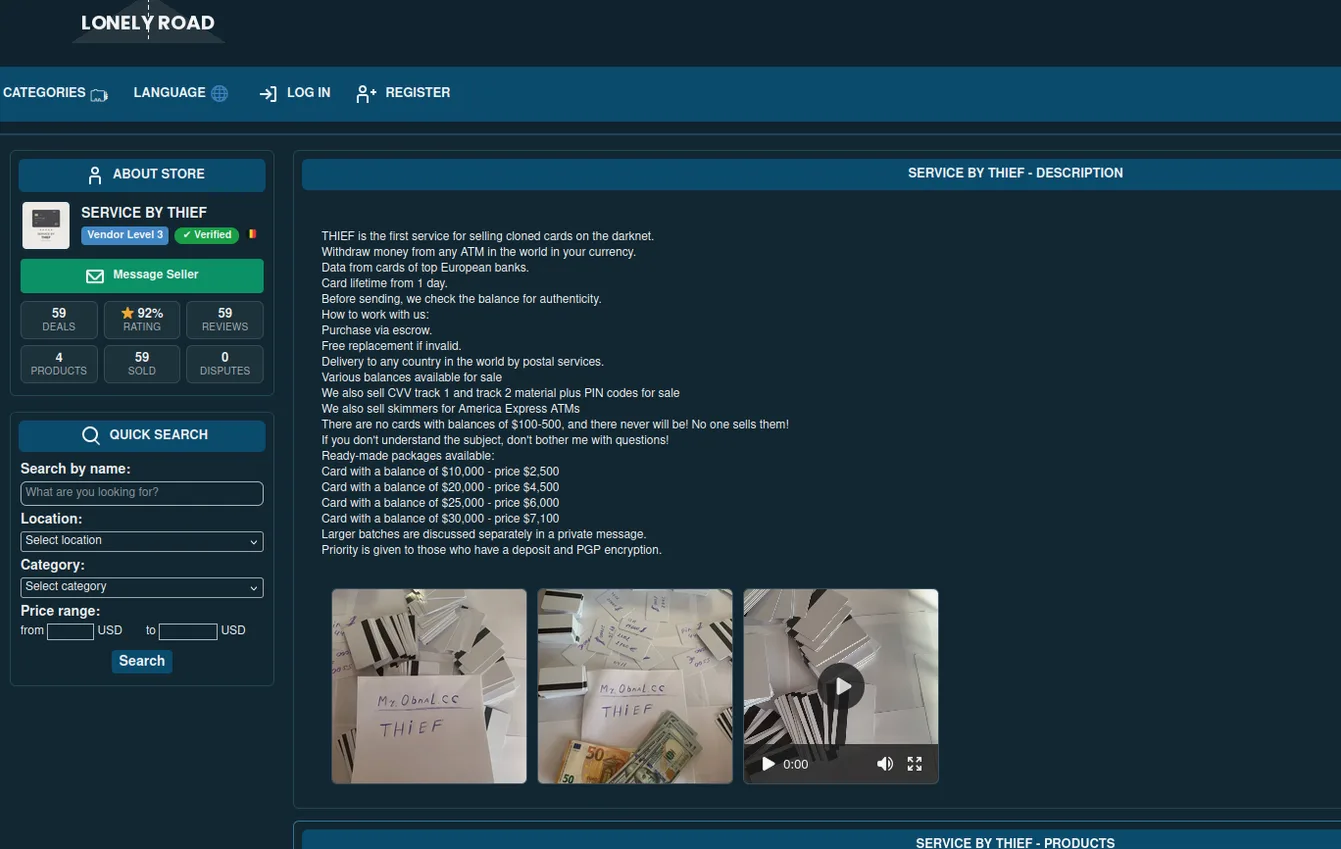
Mark T., a 34-year-old Tampa Bay resident, believed he found an easy way to get money. In November 2024, he bought six cloned debit cards with PINs from a darknet marketplace. He paid $480 in cryptocurrency for these cards. The cards contained stolen magnetic stripe data from real accounts. Mark successfully withdrew $4,200 from three ATMs. The fourth ATM, however, marked the end of his illicit activities. This story details how an elusive criminal was caught in 72 hours. It shows how ATM cameras can be highly effective. It also illustrates how a digital evidence trail led to a five-year federal prison sentence. This is not a guide on how to buy 'cloned cards reddit' type products. Instead, it explains how the system catches those who try.
We will not name the website where the purchase was made.
Understand the Carding Chain
Carding involves selling and using stolen banking data. It is a long-standing form of cybercrime. Mark's scheme followed a classic pattern:
Skimming or data breach: Criminals collect magnetic card tracks (track 1/track 2). This happens via devices like credit card skimming device detector or through data breaches. They also use shimmer devices, phishing, or purchase data dumps on darknet markets.
Embossing: Stolen data is written onto blank plastic cards. The card is made to look real, with an embossed name, expiration date, and card number.
PIN code: If the PIN was compromised (e.g., via an overlay keypad), the buyer receives a ready-to-use card for cash withdrawal.
Cash-out: The buyer withdraws money from an ATM. This occurs before the victim notices and blocks their card.
Laundering: The cash is converted into cryptocurrency. This happens through a Bitcoin ATM or P2P exchange, washing the trail.
Mark purchased his cards on a marketplace we will not name. He paid with Monero, chosen for its difficulty to track. The cards arrived by mail in plain packaging. Everything seemed like a successful transaction. However, buyers often underestimate one detail: an ATM is not just for dispensing cash. It also collects evidence.
Recognize ATM Surveillance Capabilities
A modern ATM is more than a cash dispenser. It functions as a comprehensive surveillance system. We must remember this when considering credit card skimmer protection or how to check for credit card skimmers. Many features help identify how to tell if a card reader has a skimmer or how to tell if there is a card skimmer. Inside almost every ATM, we find:
Built-in camera: This camera aims at the client's face. It records at 1080p resolution. Often, it includes infrared illumination for night mode.
Hidden camera: Many models include a second camera. It is placed at a different angle and is not visible from the outside.
Transaction log: Every withdrawal is recorded with precision. It includes time, amount, card number, ATM number, and transaction status.
Geolocation: The ATM knows its exact coordinates. It transmits this data to the bank's log.
Network log: Requests to the bank's processor are logged. This includes connection metadata.
When Mark approached his fourth ATM in Tampa Bay, the built-in camera recorded his face. He wore no mask, glasses, or hat. He withdrew $700, took the card, and left. Twenty-three seconds of video footage were sufficient. Offenders often believe darknet anonymity protects them physically. However, an ATM is not a darknet node. It is where digital crime becomes physical, and anonymity ends.
Analyze the Investigation Timeline
The investigation unfolded quickly, showcasing effective law enforcement coordination.
Day 1 (November 2024): Three victims across Florida, Georgia, and North Carolina reported unauthorized withdrawals. They filed complaints with their banks. Banks blocked the cards and shared data with fraud warning systems.
Day 3: Bank anti-fraud algorithms detected a pattern. Withdrawals from the same cloned cards in different states occurred rapidly. An emergency flag was automatically raised. The bank's investigation department received the case.
Day 5: The bank referred the case to the U.S. Secret Service (USSS). The USSS handles financial crimes. An analyst requested logs and video from all involved ATMs.
Day 8: Video from the fourth ATM provided a clear image of a face. A comparison with the Florida Department of Public Safety (DPS) driver's license database identified Mark T. He had no prior convictions. Concurrently, transaction analysis showed all withdrawals were within 40 miles of his home.
Day 12: The investigator secured a warrant for electronic traces. This included browser history, ISP records, and crypto wallet activity. ISP analysis showed Tor exit node visits during the purchase hours. The Monero wallet was linked to a darknet marketplace account. This was done via a court order to the exchange where Mark bought Monero.
Day 14: A court issued a search warrant for Mark's house. During the search, officers seized six blank plastic cards. They also found a magnetic stripe read/write device (MSR). A laptop with darknet marketplace history and Tor Browser traces was also taken. Additionally, $3,200 in cash and shipping packaging were seized.
Day 15: Mark was arrested. He confessed to buying the cards. He also admitted to cashing out four of the six. The remaining two did not work, as the bank had blocked them.
Review the Outcome and Penalties
The following table summarizes the legal repercussions and financial impact experienced by an individual involved in illicit activities, highlighting the severity of the penalties for such offenses, as detailed in this case study.
| Item | Specification |
|---|---|
| Penalties and damages owed | USD 22,000 |
| Amount of money obtained illegally | USD 4,900 |
| Price paid for compromised payment cards | USD 480 |
| Period from transaction to apprehension | 15 days |
| Federal incarceration term | 5 years (60 months) |
| Number of illicit transactions | 4 |
| Post-release oversight period | 3 years |
Understand Why Crypto Failed to Provide Anonymity
Mark paid for the cards using Monero. This cryptocurrency is designed for anonymity. However, the investigation still traced him. We identified several weak links:
The Monero purchase point: Mark bought Monero from a centralized exchange. He completed KYC (Know Your Customer) verification, providing his passport and a selfie. Under a court order, the exchange provided his identity and transaction history. While subsequent Monero movements are hard to trace, this initial purchase became crucial evidence.
The time window: The sequence of events occurred within two weeks. This included Monero purchase, marketplace transaction, card receipt, and ATM withdrawals. The coincidence of these time windows became circumstantial, yet weighty, evidence.
Physical evidence: Cards found during the search contained magnetic tracks. These matched the data stolen from real victims. This provides direct physical evidence. No crypto can erase this link. When considering carding forums dark web, we must remember physical evidence remains.
Video evidence: A face captured on camera is undeniable evidence. It cannot be laundered away. Even if all other aspects were perfectly concealed, the video alone would have connected Mark to the crime scene.
Identify Mark's Critical Mistakes
Mark made several errors that contributed to his capture. These insights are useful for understanding card skimming protection.
Withdrawals in one geographic radius: All four ATMs were within 40 miles of his home. Anti-fraud systems quickly flag such patterns. This highlights a common mistake in card skimming reddit discussions.
No disguise: He wore no mask, glasses, or hat. A clear face on camera allows direct identification through DPS databases. This is crucial for how to tell if there is a card skimmer or general ATM skimmer images analyses.
Using a centralized exchange for Monero: KYC linked his identity to the crypto purchase. He later used this crypto to pay on the marketplace.
Storing evidence at home: The search uncovered cards, an MSR device, and a laptop with browsing history. Digital evidence, including cf card cloning tools, often leaves traces even after deletion. Tor Browser leaves remnants, and OS update history can indicate usage.
Cash stored at home: $3,200 seized matched ATM dispensed denominations. This minor detail strengthened the charges.
Speed of withdrawals: All withdrawals happened within two weeks. Spreading them over months might have delayed anti-fraud triggers. However, the cameras would have still identified him.
Lessons for Security Professionals
Mark T.'s case illustrates how robust security systems can apprehend criminals. He was not the mastermind of the scheme, but the final link. This final link bears the physical risk and receives the physical punishment. The organizers higher up the chain often remain in the shadows. This presents a separate challenge for law enforcement.
Explore more
Using The Onion Web Browser: A Comprehensive Guide
Discover how to use the Onion web browser for secure and anonymous browsing, enhancing your online privacy effectively.
Dark Web Website List: What to Explore
Explore our curated dark web website list to discover resources for research, privacy, and secure communication. Stay informed and safe onl…
Xonion Link: What You Should Know
Discover what Xonion links are, how to access them safely, and the potential benefits for small business owners and individuals.
List of Dark Web Sites: Your Guide
Explore a comprehensive list of dark web sites to understand their purpose and potential risks for your business and cybersecurity strategi…