
Finding the Best Sites in Dark Web
This guide is for small business owners and individuals seeking reliable dark web resources.
$ dark web- Selection Criteria for Dark Web Sites
- Comparative Table for Finding the Best Sites in Dark Web
- Understanding the Dark Web: Beyond the Myths
- Why Small Businesses Might Explore the Dark Web (Safely)
- Essential Tools for Safe Dark Web Navigation
- Top Dark Web Resources for Information and Analysis
- Dark Web Marketplaces: What They Are and How to Avoid Them
- Monitoring Your Business on the Dark Web
- Navigating Dark Web Search Engines and Directories
- Legal and Ethical Considerations for Dark Web Use
- Choosing the Right Dark Web Resources
- Conclusion: What to Choose
- FAQ
- Where this comes from
For most users, focusing on 'Monitoring Your Business on the Dark Web' and 'Navigating Dark Web Search Engines and Directories' offers the most practical value. These areas help protect assets and gather threat intelligence. Tools like Ahmia provide a safer starting point for searches[1]. Businesses with specific legal and security teams might explore 'Legal and Ethical Considerations for Dark Web Use' and 'Why Small Businesses Might Explore the Dark Web (Safely)' to understand advanced threat intelligence gathering, consulting legal counsel as advised by the US Department of Justice[2].
Selection Criteria for Dark Web Sites
Site Purpose and Content
We assess if the site's stated purpose aligns with its actual content. Verify this by exploring different sections and comparing them to the site's 'About' page or introductory text.
Security and Anonymity Features
We look for indicators of robust security, such as PGP key availability for communication and clear statements on data retention policies. Check for these details within the site's FAQ or security policy sections.
Community and Reputation
A site's reputation within the dark web community can indicate its reliability and trustworthiness. We advise searching for discussions about the site on independent dark web forums or review platforms.
Operational History and Stability
We consider how long a site has been active and its consistency in uptime. Longer operational periods often suggest greater stability and established practices.
User Interface and Accessibility
We evaluate the ease of navigation and clarity of information presented on the site. A well-organized interface can improve the user experience and reduce potential errors.
Comparative Table for Finding the Best Sites in Dark Web
| Option | Purpose | Safety Level | Legal Considerations | Information Type | User Base |
|---|---|---|---|---|---|
| Understanding the Dark Web: Beyond the Myths | Educate on dark web misconceptions | Medium | Varies by activity [2] | General knowledge | Individuals, businesses |
| Why Small Businesses Might Explore the Dark Web (Safely) | Identify competitive intelligence | High | Consult legal counsel [2] | Market insights | Small businesses |
| Essential Tools for Safe Dark Web Navigation | Provide tools for secure access | High | Legal risks exist [2] | Navigation tools | Tech-savvy users |
| Top Dark Web Resources for Information and Analysis | Curated information sources | Medium | Legal boundaries apply [2] | Data analysis | Researchers, analysts |
| Dark Web Marketplaces: What They Are and How to Avoid Them | Inform about risks of marketplaces | Low | High legal risk [2] | Market trends | General public, businesses |
| Monitoring Your Business on the Dark Web | Track brand mentions and threats | High | Regular updates recommended [3] | Threat intelligence | Small businesses |
| Navigating Dark Web Search Engines and Directories | Guide on search engines | Medium | Legal implications vary [2] | Search results | General public |
| Legal and Ethical Considerations for Dark Web Use | Outline legal frameworks | High | Consult legal counsel [2] | Legal guidance | Businesses, legal professionals |
Understanding the Dark Web: Beyond the Myths
The dark web refers to a portion of the internet that is not indexed by standard search engines. It exists within the deep web, which encompasses all online content not accessible through conventional means. The dark web specifically requires special software, like Tor, to access its sites, which often use .onion domain extensions. This technology allows users to browse anonymously, enhancing privacy but also facilitating illicit activities.
Common misconceptions about the dark web often center on legality and purpose. While some dark web sites engage in illegal activities, such as selling drugs or stolen data, not all are criminal. For instance, many users access the dark web for privacy, security, or to share information without censorship. In 2023, darknet markets and fraud shops generated approximately $1.7 billion, indicating a significant demand for these services[4]. However, the dark web also hosts legitimate forums and resources that encourage free speech and privacy advocacy.
Legal considerations vary widely based on user actions. Merely gathering information from an online forum may not constitute a crime, provided there is no intent to engage in illegal activities[2]. Yet, accessing forums without authorization can lead to legal issues under acts like the Computer Fraud and Abuse Act[2]. We recommend consulting legal counsel before engaging with dark web resources to ensure compliance with applicable laws[2]. This is particularly important for businesses considering monitoring the dark web for threats or competitive intelligence.
Why Small Businesses Might Explore the Dark Web (Safely)
Small businesses may find value in accessing the dark web for several legitimate reasons. One primary motivation is competitive intelligence. By monitoring discussions and trends related to their industry, businesses can gain insights into market shifts and competitor activities. This approach can be executed without engaging in any illicit behavior, as passive information gathering from forums is generally not illegal[2].
Another important reason is monitoring for brand infringement. Businesses can track unauthorized use of their trademarks or copyrighted content. Regular checks on the dark web can help identify counterfeit products or services, protecting brand reputation. Kaspersky suggests that businesses should routinely update their monitoring scope, assessing their company names and related keywords every few months[3].
Cybersecurity threat intelligence is also crucial. The dark web hosts vast amounts of compromised data, with over 7.5 billion pieces of information circulating in 2023[5]. By understanding the types of threats that are discussed or sold, businesses can better prepare their defenses against cyberattacks. This intelligence can be gathered through legitimate channels, such as subscribing to threat intelligence services that monitor dark web activity.
It is essential to note that while exploring the dark web can provide valuable insights, businesses should proceed carefully. Engaging in activities that violate laws, such as accessing forums through unauthorized means, can lead to legal repercussions[2]. Consulting legal counsel before undertaking dark web monitoring is advisable[2]. This ensures that businesses can operate within legal boundaries while benefiting from the insights the dark web offers.
Navigating the dark web requires specific tools and practices to ensure safety and anonymity. Key software includes the Tor Browser, a specialized tool that facilitates access to .onion sites while masking user identity. Using a Virtual Private Network (VPN) in conjunction with Tor adds an extra layer of security by encrypting internet traffic, making it harder to trace back to the user.
Secure operating systems, such as Tails, are designed for privacy and can be run from a USB stick. Tails routes all internet connections through Tor and leaves no trace on the host machine, making it suitable for sensitive browsing. This setup is particularly effective for individuals concerned about surveillance or data leaks.
Best practices for anonymity include avoiding the use of personal information and employing a fake online identity when necessary. While using a pseudonym is often acceptable, impersonating a real person can lead to legal complications[2]. It is crucial to remain aware of the legal landscape; accessing forums without authorization can attract legal scrutiny under various laws[2].
For those seeking to gather information, tools like Ahmia provide a safer search environment by filtering abusive content, though its index is limited[1]. Monitoring the dark web for threats, especially for businesses, requires regular updates and an understanding of various data types circulating online. Kaspersky advises businesses to routinely check relevant keywords and domains to remain vigilant against potential threats[3].
These tools and practices are essential for anyone looking to explore the dark web safely and effectively.
Top Dark Web Resources for Information and Analysis
Several dark web sites provide valuable information for market research, threat intelligence, and community engagement. Here are some reputable resources:
The Hub (.onion): A forum focused on cybersecurity discussions. Users share insights on vulnerabilities and latest threats. This site is ideal for cybersecurity professionals seeking real-time information on emerging threats.
Darknet Diaries (.onion): A storytelling platform that shares true stories about the dark web. It offers insights into various activities, including hacking and cybercrime. This resource is beneficial for those looking to understand the motivations behind dark web activities.
SecureDrop (.onion): A whistleblowing platform for journalists. It allows sources to share sensitive information anonymously. This site is essential for investigative journalists needing secure communication channels.
Ahmia (.onion): A search engine that indexes dark web content while filtering out abusive sites. It is suitable for users looking for specific information without exposing themselves to illegal content. However, its coverage is limited compared to other search engines[1].
Kaspersky Threat Intelligence Portal (.onion): Provides insights into cyber threats and vulnerabilities gathered from dark web monitoring. This resource is valuable for businesses needing to stay informed about emerging threats and compromised data[3].
While these sites can offer significant insights, users should be aware of legal implications. Passive information gathering is generally not illegal, but accessing forums without authorization can lead to legal issues[2]. Users should also consider their specific needs, as not all resources will be relevant for every individual or organization. For example, while SecureDrop is crucial for journalists, it may not serve the interests of businesses focused on competitive intelligence.
Dark Web Marketplaces: What They Are and How to Avoid Them
Dark web marketplaces are online platforms where illicit goods and services are bought and sold. These sites often facilitate transactions involving drugs, weapons, stolen data, and other illegal items. The total revenue generated by darknet markets and fraud shops reached approximately $1.7 billion in 2023, showing a notable rebound after the closure of the Hydra Marketplace in 2022[4].
Engaging with these marketplaces carries significant legal and security risks. Accessing them can lead to unintended legal consequences, especially if users exploit vulnerabilities or use stolen credentials to access forums[2]. The legal landscape is complex; while merely gathering information from a forum may not be a crime, engaging in transactions or accessing unauthorized content can violate laws such as the Computer Fraud and Abuse Act[2].
For small businesses, the risks associated with dark web marketplaces often outweigh any potential benefits. Engaging with these sites can damage a company's reputation and expose it to legal scrutiny. Instead of exploring these marketplaces, we advise small business owners to focus on safer alternatives for gathering intelligence and monitoring threats.
The dark web is also a hub for cybercriminal activity. In 2023, over 7.5 billion pieces of compromised information circulated on the dark web, highlighting the pervasive nature of data breaches and cyber threats[5]. Thus, while dark web marketplaces may seem appealing for certain activities, the potential costs—both legal and financial—are substantial.
Monitoring Your Business on the Dark Web
Small businesses can proactively monitor for mentions of their brand, intellectual property, or employee data on the dark web through various methods. Regularly scanning forums and marketplaces can help identify unauthorized use of trademarks or leaked employee credentials. This practice is essential, considering that over 7.5 billion pieces of compromised information circulated on the dark web in 2023, a 44.8% increase from the previous year[5].
Dark web monitoring services offer several benefits for early threat detection. These services can alert businesses to potential data breaches or discussions about their brand. By utilizing such monitoring, companies can respond swiftly to threats, potentially mitigating damage. For instance, the average number of ransomware-related blog posts surged to 476 per month in 2023, indicating an uptick in cyber threats[6]. Early detection of these discussions can help businesses bolster their defenses.
It's important to note the limitations and legal considerations of dark web monitoring. While passively gathering information from forums is generally not illegal[2], accessing these sites without proper authorization can lead to legal issues under the Computer Fraud and Abuse Act[2]. Therefore, businesses should consult legal counsel to ensure compliance with applicable laws when monitoring the dark web[2].
Monitoring is most effective when conducted regularly. Kaspersky recommends that businesses update their monitoring scope by checking company names and subsidiaries monthly and keywords every six months[3]. This proactive approach helps maintain awareness of potential threats and protects business interests effectively.
Dark web search engines and directories serve as tools for users seeking information within the hidden parts of the internet. Examples include Ahmia and Torch. These platforms index .onion sites, but they have notable limitations compared to traditional search engines.
One primary limitation is coverage. For instance, Ahmia focuses on filtering out abusive content, making it safer but less comprehensive[1]. In contrast, surface web search engines can index billions of pages, while dark web search engines may only cover a fraction of available sites. This limited indexing can hinder users’ ability to find specific information.
Another factor is the unique structure of the dark web. Unlike the surface web, content is often hidden behind layers of anonymity. As a result, search engines may not return relevant results unless users know the exact keywords or site names. This situation can complicate effective searching.
For effective navigation, users can employ several strategies:
Use specific keywords: The more precise the search terms, the better the chance of retrieving relevant results.
Familiarize with directory structures: Understanding how different directories categorize content can help locate desired information.
Utilize multiple search engines: Since each search engine has a unique indexing method, using several can improve the chances of finding relevant content.
These tips are particularly useful for individuals and small businesses looking to gather intelligence or monitor threats. While navigating the dark web requires care, effective searching can yield valuable insights when approached thoughtfully.
Legal and Ethical Considerations for Dark Web Use
Accessing the dark web involves navigating complex legal and ethical boundaries. It's crucial for users to understand what activities are permissible and which could lead to legal repercussions.
Passive information gathering, such as reading forums, typically does not constitute a federal crime if done without criminal intent[2]. However, unauthorized access to forums, such as exploiting vulnerabilities or using stolen credentials, can attract legal scrutiny under the Computer Fraud and Abuse Act (CFAA)[2]. Engaging in transactions or participating in illicit activities can lead to significant legal consequences.
Using a fake online identity to access forums is generally acceptable, but impersonating a real person without consent can result in legal problems[2]. Businesses considering dark web monitoring should consult legal counsel to ensure compliance with relevant laws[2]. This proactive approach minimizes risks associated with potential legal violations.
Ethically, users should remain aware of the impact of their actions. Engaging with illicit markets or forums not only risks legal issues but also contributes to a broader culture of cybercrime. In 2023, darknet markets and fraud shops generated approximately $1.7 billion, indicating a thriving underground economy[4]. This underscores the importance of ethical responsibility when navigating these spaces.
For individuals and businesses, staying within legal frameworks is essential. Understanding the legal landscape can help users leverage dark web resources safely and effectively, avoiding pitfalls associated with illicit activities.
Choosing the Right Dark Web Resources
If you are a cybersecurity professional… — choose The Hub, because it offers real-time insights into vulnerabilities and emerging threats.
This forum allows users to share information on the latest threats. It provides a platform for in-depth cybersecurity discussions.
If you are an investigative journalist… — choose SecureDrop, because it enables anonymous and secure communication for sensitive information.
This platform is designed for whistleblowers to share data safely. It helps protect sources while facilitating critical reporting.
If you are a small business owner focused on threat intelligence… — choose Kaspersky Threat Intelligence Portal, because it provides insights into cyber threats and compromised data.
This portal helps businesses stay informed about potential risks. It gathers data from dark web monitoring to offer actionable intelligence[3].
If you are seeking general information while avoiding illicit content… — choose Ahmia, because it indexes dark web content and filters out abusive sites.
This search engine helps users find specific information more safely. Its filtering capabilities reduce exposure to harmful materials[1].
If you need to understand cybercrime motivations… — choose Darknet Diaries, because it shares true stories about hacking and cybercrime activities.
This resource offers narratives that explain the reasons behind dark web operations. It provides context on various illicit activities.
Conclusion: What to Choose
For most users, including small business owners, we recommend starting with established, curated resources. Utilize Ahmia for general searches, as it filters abusive content[1]. For threat intelligence, the Kaspersky Threat Intelligence Portal offers valuable insights into cyber threats and compromised data[3].
Avoid direct engagement with dark web marketplaces. These platforms carry significant legal and security risks, and the potential costs outweigh any benefits[4]. If monitoring your brand or data is a priority, consider dark web monitoring services. These services can alert you to potential breaches without requiring direct engagement with risky sites.
Refer to How to Use a Dark Website Browser for guidance on safe access.
FAQ
- What are the top 5 dark web sites?
We do not provide a list of 'top' dark web sites due to the inherent risks and illicit nature of many such platforms. Darknet markets and fraud shops collectively received $1.7 billion in 2023, indicating significant illegal activity[4]. Instead, we recommend using curated resources like Ahmia for safer searches, as it filters abusive content[1].
- Is it illegal to watch the dark web?
Passively gathering information from an online forum, even one where criminal conduct occurs, is unlikely to constitute a federal crime, especially without criminal intent[2]. However, accessing a forum without authorization, such as by exploiting a vulnerability or using stolen credentials, can raise legal concerns under the Computer Fraud and Abuse Act[2].
- What website to go on dark web?
For general information while avoiding illicit content, we recommend Ahmia, as it indexes dark web content and filters out abusive sites[1]. For threat intelligence, the Kaspersky Threat Intelligence Portal provides insights into cyber threats and compromised data[3].
- Can the FBI track the dark web?
While we cannot comment on the FBI's specific tracking capabilities, the US Department of Justice advises organizations to consult legal counsel and cultivate relationships with local FBI and U.S. Secret Service field offices if contemplating dark web operations[2]. This suggests that law enforcement agencies do monitor activities on the dark web.
Where this comes from
- 1. Best Dark Web Search Engines for Anonymous Browsing
- 2. Legal Considerations when Gathering Online Cyber Threat Intelligence and Purchasing Data from Illicit Sources
- 3. Kaspersky Digital Footprint Intelligence
- 4. Darknet Market Revenue Rises in 2023 - Chainalysis
- 5. CRIF Cyber Observatory - 2023 Yearly Report
- 6. Dark web market trends: last year in review and projections for 2024
Explore More Dark Web Insights
Discover additional resources to enhance your understanding.
Browse More ArticlesExplore more
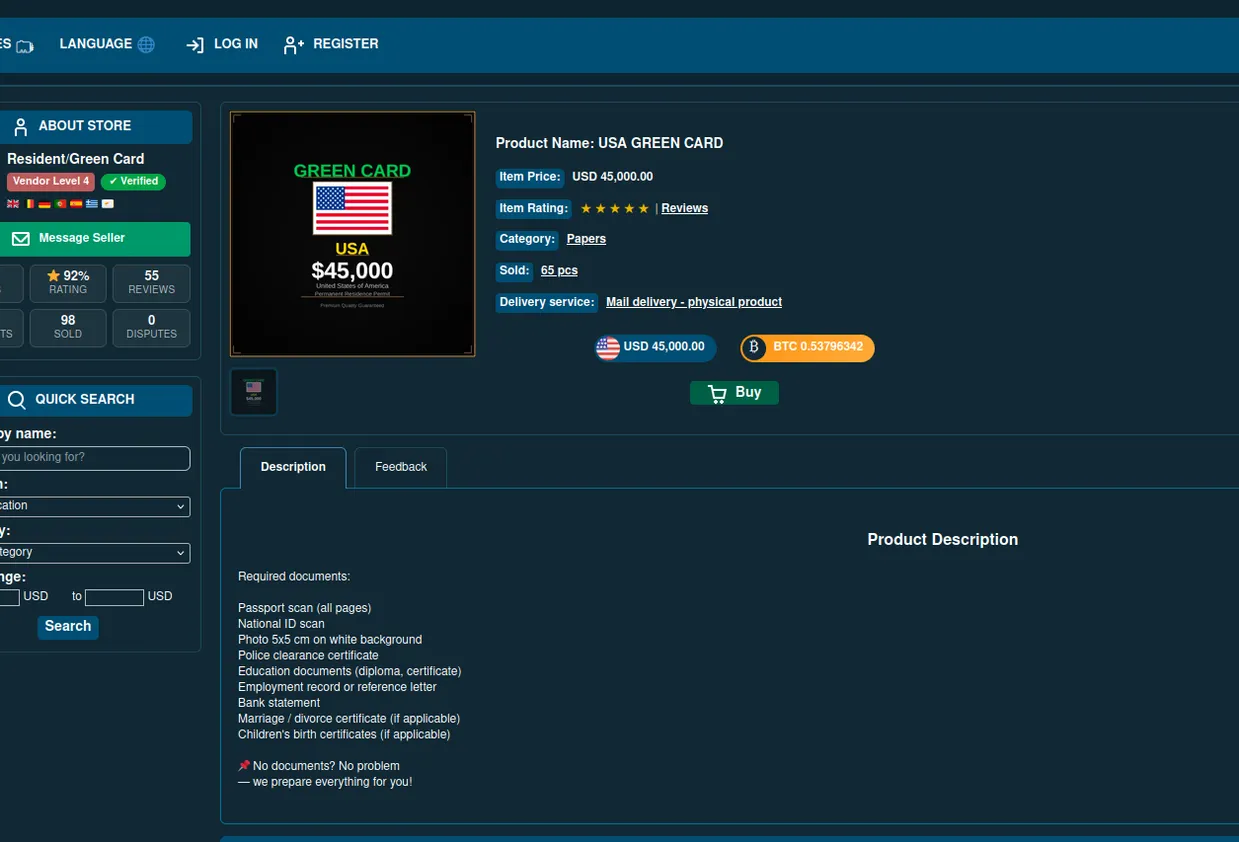
The Illusion of Buying Passports: Dark Web Scams Uncovered
We analyze dark web offers to buy passport online and green card for sale, revealing that low prices are always scams. We detail the true c…
Understanding Darknet Web: Key Insights
Explore the darknet web to understand its structure, risks, and potential benefits for small business owners and individuals.
Choosing the Best Dark Web Browser
Discover the best dark web browsers for secure and private browsing. Learn key features and comparisons to choose the right one for you.
Accessing the Deep Dark Web: What You Should Know
Learn how to safely access the deep dark web for business intelligence, including essential tools and best practices.